

Hearing Health & Dementia Prevention
Get the facts on the importance of seeking regular hearing tests
Hearing loss affects more than the ability to communicate.
It’s a chronic condition that may put your brain at risk of cognitive decline and dementia, affecting your ability to think, focus, and remember.
But taking care of your hearing health may help take care of your brain. That makes regular hearing evaluations — just like periodic checkups for your eyes and teeth — all the more important for overall wellness.
Did you know?
The exciting ACHIEVE Study credited audiologic counseling and properly fit hearing aids in slowing loss of thinking and memory abilities nearly 50% among older adults at higher risk of cognitive decline.
Hearing Loss & Dementia
Does hearing loss cause dementia? The potential causal relationship between hearing loss and cognitive decline and dementia isn’t fully clear or conclusive. In discussing ties between hearing loss and cognition problems, the groundbreaking ACHIEVE investigation points to possibilities that might include:
- Distorted sound signals, which may tax the brain as it works harder to process sounds
- Structural brain changes, which might result from sensory deprivation
- Social isolation, which can reduce participation in activities that stimulate the brain
Even without definitive cause and effect, connections between hearing loss and cognitive decline are alarming. Studies have uncovered, for example:
- Evidence of accelerated brain atrophy occurring alongside hearing loss
- Faster rate of cognitive decline among older adults with hearing loss
- 35% higher dementia risk in those with hearing loss and a 16% increased risk for every 10 decibels of worsened hearing
A Johns Hopkins Bloomberg School of Public Health-led study further illustrates the heightened dementia risk that hearing loss can pose as well as the importance of professional hearing care. It found that among older adults with moderate to severe hearing loss:
- There was greater prevalence of dementia over those with normal hearing
- Use of hearing aids was linked to a 32% lower dementia prevalence
Causes of Dementia
Nerve cells or neurons, critical to movement, thinking, sensations, emotions, and other functions, send and receive messages between the body and the brain. Injury or destruction of these cells can impair that critical communication, triggering cognitive problems. Much like cutting the wires in a complex mobile device, damaging the neurons disrupts operation of the brain’s network.
How the nerve cells become damaged or destroyed can vary. The most common cause of dementia is Alzheimer’s disease, which typically develops in the late-middle or older stages in life. However, dementia isn’t a foregone conclusion with aging. Younger people can also develop the condition.
Some dementia risk factors apart from aging include:
- Family history
- Down syndrome
- Physical inactivity
- Smoking
- Excessive alcohol use
- Social isolation
- Air pollution
- Hearing loss
Signs of Cognitive Decline
One of the earliest signs of cognitive decline is disruptive memory loss. Everyone forgets things now and then. Frequent trouble recalling more recent information — the place you left your keys, plans to pick up friends at the airport — could mean something more serious. If you have concerns about cognitive issues for yourself or a loved one, talk to a primary care provider for further screening.
Consider this:
- As a leading potentially modifiable risk factor for dementia, hearing loss may be an early indicator
- Hearing loss can sneak up on you, but routine hearing evaluations can aid in prompt identification and treatment
- We recommend hearing tests as soon as changes are noticed — especially among older adults or those with other risk factors such as noise exposure, ototoxic medications, or history of excess earwax buildup
Impact of Dementia
Dementia is a progressive neurological disorder typically leading to reduced cognitive functioning, such as the capacity to:
- Reason
- Recall information
- Communicate
The condition, which affects over 55 million people on a global scale and sees close to 10 million incidences annually, is often connected to aging but isn’t necessarily an inevitable part of growing older. Universally the disorder can take a heavy cognitive, physical, mental, and economic toll.
Like dementia, hearing loss is serious. It’s a medical condition that needs a medical approach to care. If it’s been a while since your last checkup or you have signs of hearing difficulty, don’t wait. Contact our knowledgeable team to book your personalized appointment today.

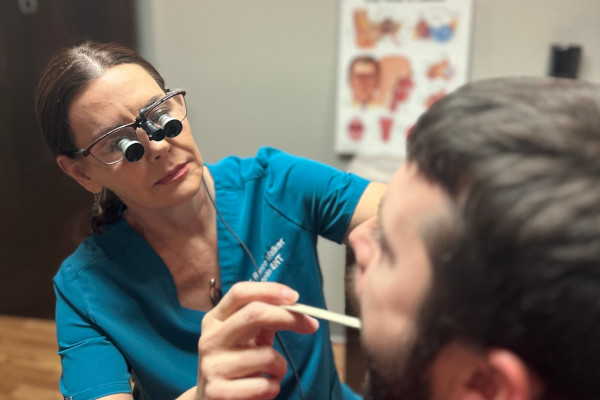
Your Health Deserves Expert ENT Care
From better hearing and improved sleep to allergy relief and younger-looking skin, our team is here to help every member of your family feel their best. Discover compassionate ENT care right here in your community.