
Swallowing & Dysphagia

Understanding Swallowing Difficulties (Dysphagia)
Dysphagia is the medical term for difficulty swallowing, a problem more prevalent among older adults. It may feel like food or liquid is sticking in your throat, moving slowly, or even causing coughing or choking.
Occasional swallowing trouble can happen with colds or throat irritation, but persistent symptoms should be evaluated by an ENT specialist to determine the cause and prevent complications such as malnutrition or aspiration. With proper treatment, most patients can improve swallowing and reduce the risk of further issues.
Common Causes and Symptoms
Swallowing involves a complex coordination of muscles in the mouth, throat, and esophagus. When something disrupts that process, it can lead to discomfort or danger.
Common causes include:
- Neurological conditions (stroke, Parkinson’s, multiple sclerosis)
- Acid reflux or LPR (laryngopharyngeal reflux)
- Throat or esophageal inflammation
- Structural issues such as strictures, webs, or tumors
- Post-surgical changes or aging-related muscle weakness
Symptoms to watch for:
- Pain or difficulty swallowing
- Sensation of food sticking in the throat or chest
- Coughing, choking, or regurgitation while eating
- Unexplained weight loss or dehydration
If you experience these symptoms regularly, professional evaluation is essential.

Diagnosis and Treatment
As an ENT provider, we focus on swallowing difficulties that originate in the larynx and oropharynx. For swallowing issues primarily affecting the esophagus, such as strictures or motility problems, we refer patients to a gastroenterologist for evaluation and treatment.
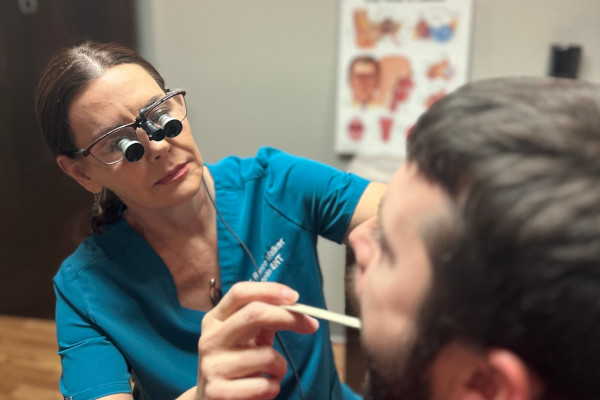
ENT evaluations of swallowing problems involve a flexible scope or imaging studies to observe how food and liquid move through the throat. This evaluation can identify ENT-treated conditions such as reflux-related irritation, postsurgical changes, structural abnormalities, or age-related muscle weakness that affect swallowing.
Treatment depends on the underlying cause and may include:
• Dietary modifications or swallowing therapy
• Medications for reflux or throat inflammation
• Referral to a speech-language pathologist for specialized therapy
With proper care, most patients experience improved swallowing, including greater ease in eating and drinking. So don’t delay. If you’re having trouble swallowing, contact our knowledgeable team for a comprehensive evaluation and personalized treatment plan today.
Your Health Deserves Expert ENT Care
From better hearing and improved sleep to allergy relief and younger-looking skin, our team is here to help every member of your family feel their best. Discover compassionate ENT care right here in your community.